


Round Rock Drug Distribution Lawyer
Being accused of distributing drugs in Texas is a life-changing event. Attorney Ryan H. Deck is a Board-Certified Criminal Defense Lawyer with nearly two decades of experience defending clients in Round Rock and works exclusively in Williamson County.
If you’re under investigation or facing charges, he can intervene early, protect your rights, and build a defense strategy tailored to your case.
What Is Drug Distribution Under Texas Law?
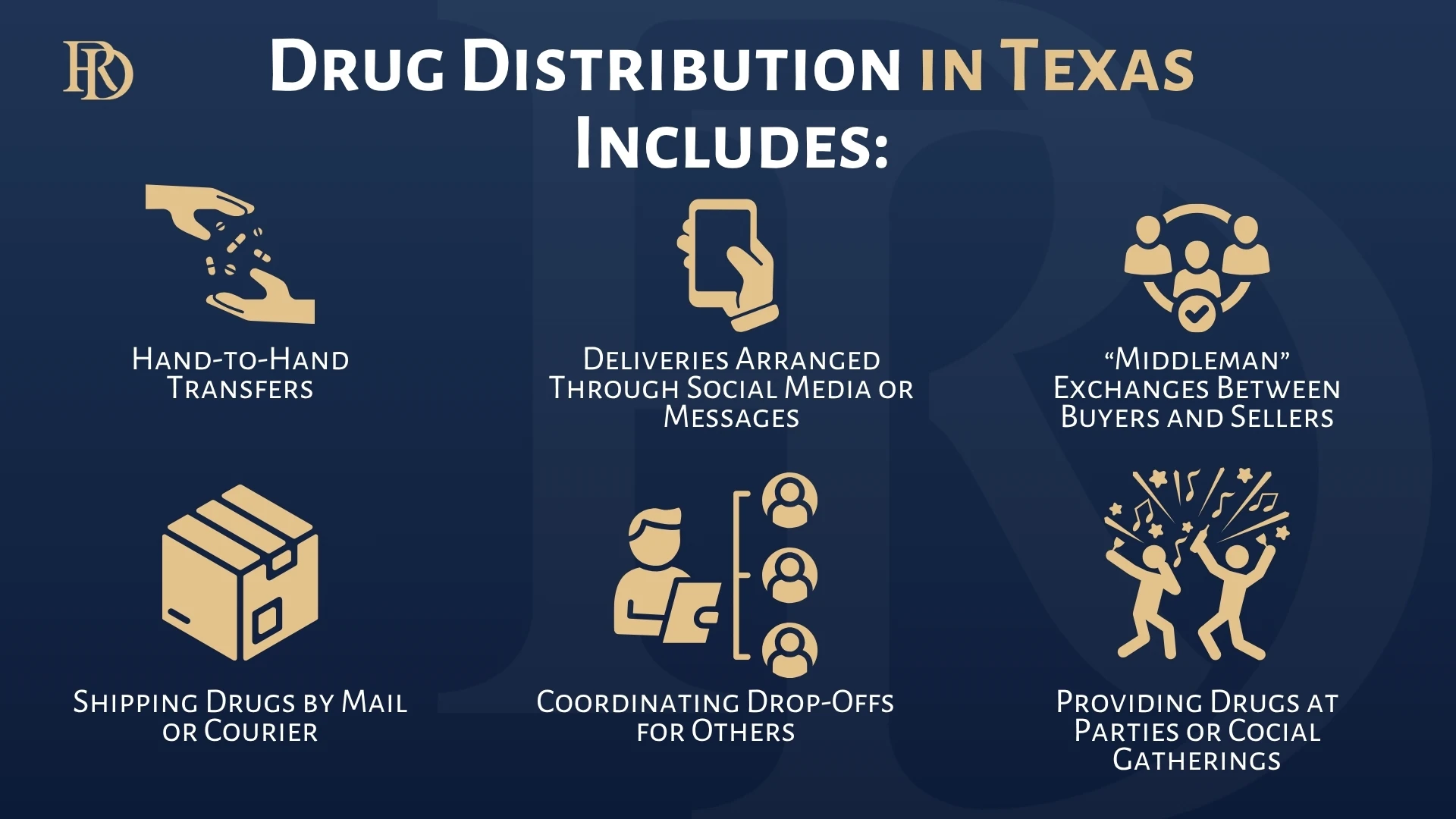
Under Texas Health & Safety Code § 481, “drug distribution” means delivering or transferring a controlled substance, whether or not money changes hands. Distribution can include:
- Hand-to-hand transfers
- Deliveries arranged through social media or messages
- “Middleman” exchanges between buyers and sellers
- Shipping drugs by mail or courier
- Coordinating drop-offs for others
- Providing drugs at parties or social gatherings
Unlike a drug possession case, prosecutors don’t have to prove you owned the drugs, only that you delivered or intended to deliver them.
Attorney Ryan H. Deck defends against drug distribution charges involving (but not limited to):
- Marijuana and THC products
- Cocaine and crack cocaine
- Methamphetamine
- Heroin and fentanyl
- Ecstasy / MDMA / Molly
- LSD / mushrooms
- Prescription drugs (Xanax, OxyContin, Adderall, etc.)
- Synthetic cannabinoids & “K2/spice”
- Anabolic steroids
Distribution cases are often supported by undercover buys, confidential informants, surveillance, recorded communications, or controlled deliveries, making early legal intervention critical.
Distribution vs. Trafficking vs. Possession with Intent
These terms are often confused. In Texas:
- Distribution = delivering a controlled substance.
- Trafficking = larger-scale distribution, often involving transport across jurisdictions.
- Possession with intent = possessing drugs with indicators like scales, baggies, or messages.
Penalties for Drug Distribution in Texas
Drug distribution penalties in Texas vary based on the type of controlled substance (Penalty Group) and the amount involved. Distribution is a felony in all cases, and enhancements may apply for distribution to minors, use of firearms, or offenses committed in a “Drug-Free Zone”.
Aggravating Enhancements
Drug distribution penalties may increase if:
- The offense occurred in a Drug-Free Zone (schools, playgrounds, youth centers, etc.)
- A firearm was present during the offense
- Distribution was to a minor
- The case is linked to organized criminal activity
- The case is taken over by federal prosecutors
Consequences of a Drug Distribution Conviction
A drug distribution conviction affects far more than your permanent criminal record. Potential consequences include:
- Prison sentences in a state penitentiary or federal facility
- Permanent felony record affecting employment & housing
- Loss of firearm rights for felony convictions
- Driver’s license suspension in certain cases
- Immigration complications, including deportability
- Asset forfeiture, including cash, vehicles, or electronics
- Loss of professional or occupational licenses
Defenses Against Drug Distribution Charges
Depending on the facts of your case, we may challenge the charges through approaches like:
Illegal Search & Seizure
Searches of homes, vehicles, packages, or cell phones may violate the Fourth Amendment, leading to suppressed evidence.
Entrapment or Government Misconduct
Undercover operations and informants sometimes push people into conduct they otherwise wouldn’t do.
No “Delivery” Occurred
Prosecutors must prove an actual transfer or, at least, an actual attempt to transfer, not just possession or association.
No Intent to Distribute
Bagging, scales, and messages may be misinterpreted; intent must be proven beyond a reasonable doubt.
Unreliable Informants
Confidential informants often have criminal motives or favorable deals, undermining credibility.
Digital & Surveillance Challenges

Messages, calls, and surveillance video may be incomplete, misinterpreted, or lacking context.
Substance Was Not a Controlled Substance
Lab testing errors and chain-of-custody problems are common, as not everything seized is illegal.
How We Can Help You
From investigation to trial, we handle the full defense strategy:
- Early case intervention before charges are filed
- Protection against self-incrimination during questioning
- Challenging search warrants and surveillance warrants
- Suppressing illegally obtained evidence
- Negotiating reduced charges or diversion
- Fighting for dismissals or “not guilty” verdicts at trial

Target
Target

Accused of Drug Distribution in Texas? We Can Help.
If you’re charged with drug distribution or any other drug-related crime, contact us immediately. Early intervention can change outcomes: from reduced charges to dismissed cases.
Get a Confidential Case Review
Charged or under investigation for drug distribution? Call as soon as possible! Waiting to contact me for help will only make your situation worse. Meet with Attorney Ryan H. Deck and discuss your next steps before speaking to the police.

FAQs
This is some text inside of a div block.
Is drug distribution a felony in Texas?
Yes. Distribution is always a felony, even for small amounts or prescription drugs.
Can I be charged if I didn’t sell the drugs?
Yes. Distribution only requires delivery, not payment.
Can distribution charges go federal?
Yes. Cases involving mail, firearms, minors, or interstate activity can be adopted by the DEA or federal prosecutors.
What if the drugs were not mine?
Prosecutors must prove you knowingly delivered drugs, not merely that you were present.